Six-foot Krishna-shila Murti
The Lord stands about six feet tall in black stone, carved at Mahabalipuram, holding the Vel and wearing a silver crown, as Dandayudhapani. One-foot utsava murtis sit at his feet.
 SARAVANABHAVAAlayam · Turkayamjal
Book Seva
శరవణభవ ఆలయం
Sri Saravana Subramaniya Swamy Temple
Sthala Puranam
Ramula Goud of Turkayamjal tried again and again to build a house on his land, and every attempt failed. Sensing that the place held something sacred, he set out to understand why.
He met Sri Kamalananda Natha, an upasaka of Lord Subrahmanya, who saw the land and declared it holy: a temple to Subrahmanya must rise here. Ramula first promised only a small mandapam, but obstacles returned until he resolved that the land belonged to the Lord.
With the guru's blessings the temple was completed in a short time, and the village came to be known as Subrahmanyapuram. Ramula Goud's family continues the tradition. Devotees today lovingly call it the Saravanabhava Alayam.
The temple was built under the guidance of Brahmasri Kamalananda Natha. While studying the traditions of Subrahmanya temples across India, he had all their customs brought together here according to the Agama shastra, reviving practices that had been forgotten.
Source of this history: ETV Life "Teerthayatra", 28 Jan 2025 (Telugu)
The Murti
మూలవిరాట్
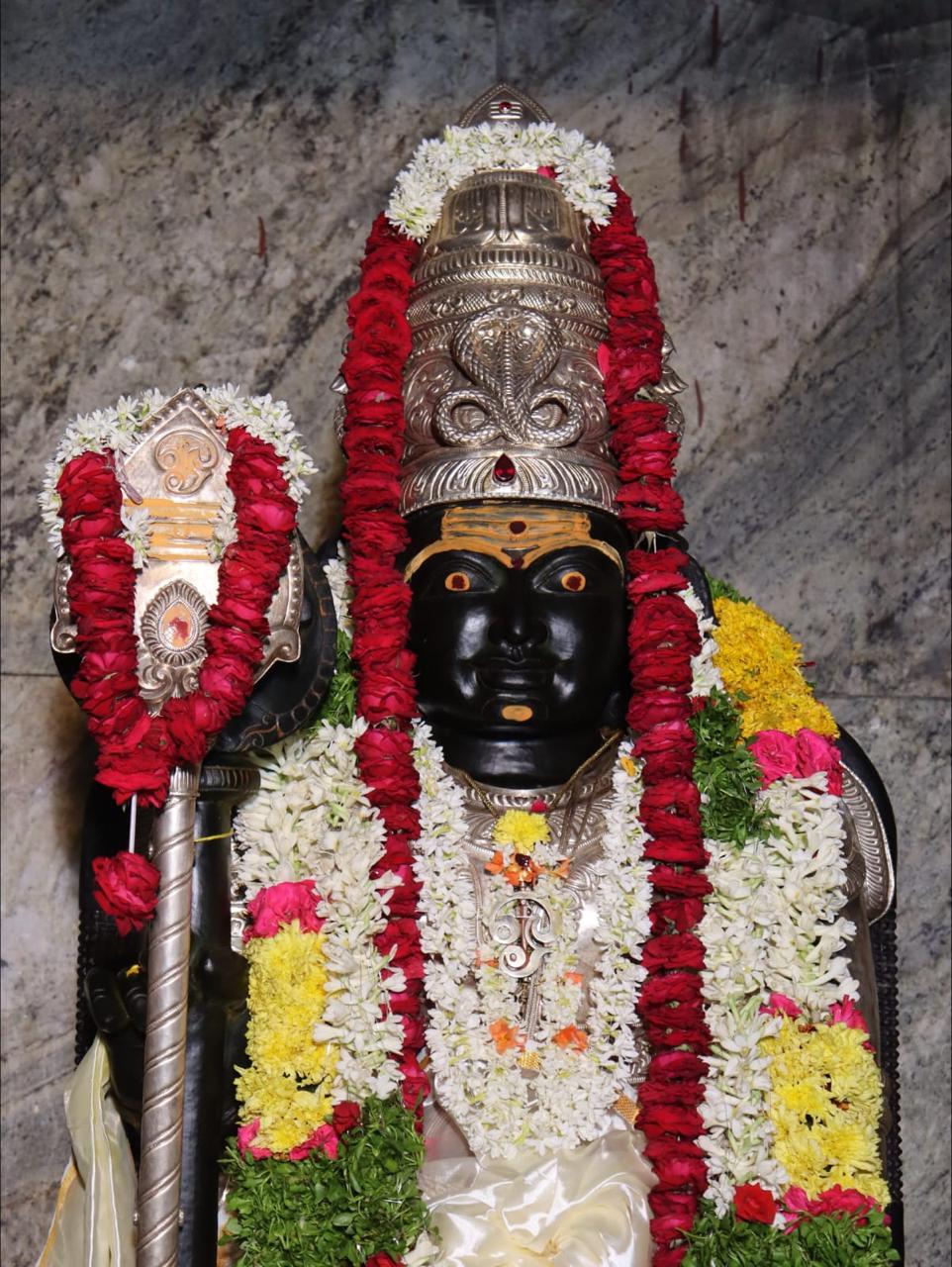
The Lord stands about six feet tall, carved in black Krishna-shila at Mahabalipuram and consecrated by Agama rites. He holds the Vel and wears a silver crown, standing ready to grant his devotees' wishes. Utsava murtis about one foot high sit at his feet.
There are no electric lights in the garbhalaya. At night the Lord is seen only by the light of oil lamps, a darshan that devotees say no amount of time is enough for.
The sanctum doorway carries the Nava Naga Bandham, nine serpents including Ananta, Takshaka and Kaliya. The dwarapalakas Sudeha and Sumukha stand on either side, and the Ashta Bhairavas guard the kshetra.
Agama features
ఆలయ విశిష్టతలు
The Lord stands about six feet tall in black stone, carved at Mahabalipuram, holding the Vel and wearing a silver crown, as Dandayudhapani. One-foot utsava murtis sit at his feet.
There are no electric lights in the sanctum. At night the Lord is seen only in the glow of oil lamps.
A copper-thread energy line runs from the yantra and shankha beneath the idol up to the vimana shikharam, an Agama technique from around the 8th century, revived here.
The flag-mast is shaped like the Vel and rises from a sacred anthill (putta). A Vel also crowns the shikharam, and the peacock vahana faces the Lord.
The sanctum doorway carries nine serpents, Ananta, Takshaka, Kaliya and others, guarded by the dwarapalakas Sudeha and Sumukha. Ashta Bhairavas protect the kshetra.
Behind the sanctum is a sacred spot linked to the Tamara Tantu. Devotees believe a wish spoken to the Lord here is surely heard.
Tattva
సుబ్రహ్మణ్య తత్వం
The Vedas see the Lord as the year itself: six faces are the six ritus, twelve arms the twelve months.
Valli is the Kundalini shakti and Devasena the power of nada. They are the Lord's energies, not worldly consorts.
He destroys the asura nature within us and leads us on the path of dharma as the teacher hidden in the heart.
SubrahmanyaMuruganKartikeyaSkandaShanmukhaGuhaSaravanabhavaKumaraswamyDandayudhapaniSwaminathaDevasenapati
Prayers answered
Seva registration
Call or WhatsApp the temple office to register for any seva, homam or kalyanam.
Listen while you read